
Agree on the greeting before connecting
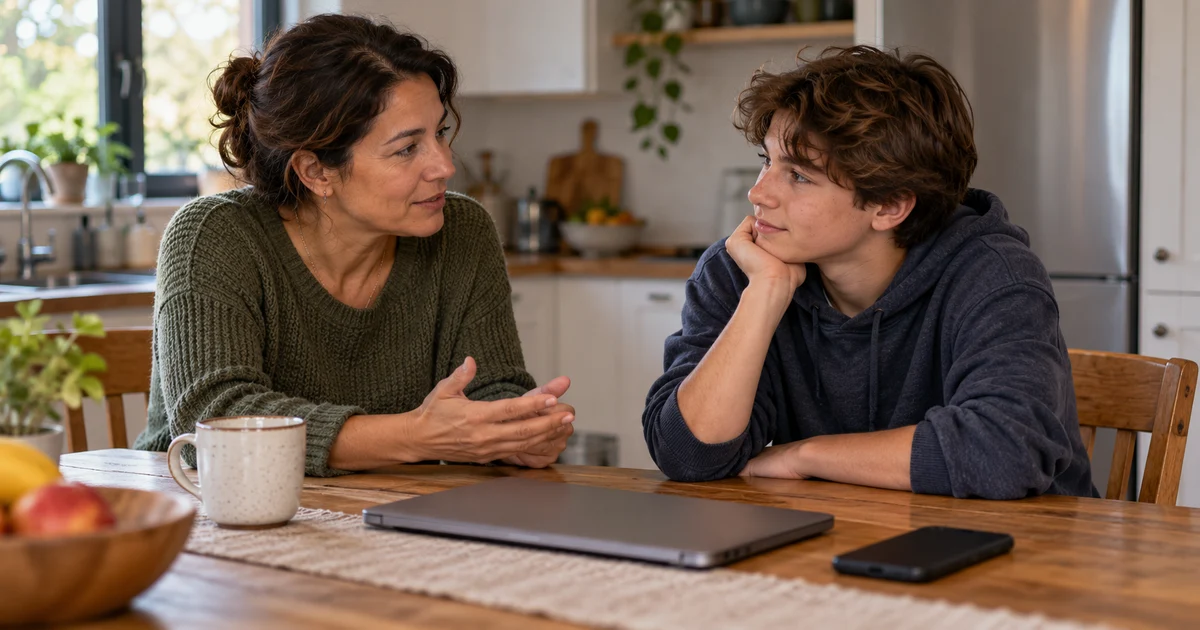
Your child wants to talk to the family but does not want to appear on camera. A suggested opening is: “We can prepare the greeting. Would you like audio only, or would you rather start with me and decide afterwards?” The initial decision need not become a discussion in front of everyone on the call.
This article proposes a conversation for adults using ConversaYoung’s preparation approach. It does not claim to reproduce an integrated guide opened in the app or diagnose why someone avoids a camera. The Android app is being prepared and has no public download yet.
Listen to what they want to change
Not wanting a camera does not explain the reason by itself. You might ask “What would you like to be different about this call?” and wait. They may want audio, a brief greeting or not to explain yet. These are possibilities in the example, not categories for classifying a child.
The NSPCC discusses different levels of comfort with webcams in organised activities. That setting is not identical to a family call, but it is a reminder that turning on a camera does not mean the same thing to everyone. We do not present organisational requirements as legal instructions for families.
An agreement an adult can uphold
In this fictional example, you are greeting relatives and agree to begin with audio. Before joining, the adult explains: “They will say hello without a camera today.” If someone insists during the call, the adult can repeat the agreement without asking the child to justify it to the group.
Prepare three concrete details:
- Who connects and checks how to disable the camera or microphone in the chosen tool.
- How to request a pause without explaining the reason to everybody.
- What to do if somebody suggests a photo or recording.
These are suggested decisions, not guarantees about other participants’ behaviour. Knowing the camera button does not control someone else’s screenshots.
Joining live does not settle recording
Common Sense Media’s video-chat guidance notes that participants can record or capture the screen. Its guide concerns classes; here we use that technical limitation, not its classroom rules. It was checked alongside the NSPCC on 26 October 2026.
Before a capture, ask again what will happen to it and who will see it. Do not promise that a private conversation technically prevents copying.
ConversaYoung’s public library presentation explains its openings, questions and boundaries by situation and age. Use it to understand the approach and prepare one sentence you can uphold during the call. It is educational guidance, not a substitute for professional help or emergency services.