
First ask whether they mean recording or broadcasting
A recorded video can be reviewed before deciding whether to share it; a livestream exposes events while they happen. Before discussing a tripod or camera, ask what they want to make and who they expect to watch. An interest in creating videos does not automatically settle permission to broadcast.
ConversaYoung provides material for adults preparing conversations with children, using search, categories and an age filter. Its current product facts describe a local Android preview with no public download. Our example is editorial, not a script we claim is included in the app.
A proposal that still needs decisions
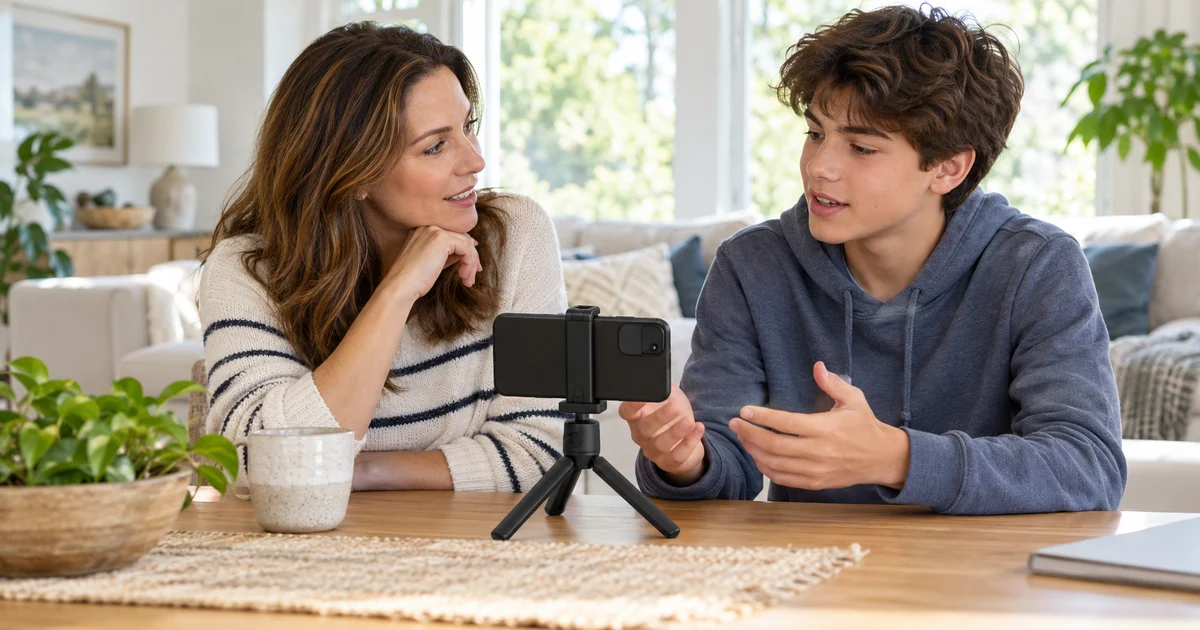
Imagine a teenager wants to show how they draw. You might ask whether they want to record it to watch together or have other people watch as it happens. Those are different proposals, even with the same phone.
Prepare specific questions:
- What audience do they have in mind, and how will you check who can access it?
- What would appear behind them: names, other people’s photographs or clues to the location?
- What will you do if somebody enters the room or does not want to appear?
- How would the broadcast end if they no longer wanted to continue?
These questions support decisions; they do not certify safety. Before using a platform, review its current age terms and actual options with the responsible adult. This guide does not involve opening or registering accounts.
The difference a recording does not solve
The UK Safer Internet Centre, checked on 27 October 2026, warns that viewers can record a broadcast and keep it after it ends. “We will delete it afterwards” should therefore not become a promise that every copy can be recovered.
In our example, you could choose to record a practice video without publishing it and review the framing together before considering another step. That choice does not commit you to livestreaming later. If somebody else appears, their involvement deserves its own conversation; having the device at home does not make everything it captures shareable.
Prepare your response without turning it into an interrogation
Listen to what appeals to them: showing a process, sharing with friends or trying a format. Explain which decision still needs resolving and postpone broadcasting while reviewing it. We do not promise they will like the decision or that all risks disappear.
ConversaYoung is for adults. It does not converse with the child or assess risks for them. The product presentation explains its scope and sources. Leave this conversation with a recognisable decision: recording without sharing, reviewing another option or not broadcasting now. Buying equipment or writing a script does not settle who will watch a livestream.